Unlocking the Secret Worlds: A Deep Dive into Fan Theories & Community Discussion
Ever found yourself rewatching a favorite show, noticing a tiny detail, and suddenly your brain explodes with a "what if?" moment? You're not alone. Welcome to the vibrant, imaginative world of Fan Theories & Community Discussion, where dedicated viewers and players transform passive consumption into an active, collaborative quest for deeper meaning, hidden connections, and alternative narratives. It's where the stories we love truly become ours.
It’s an ecosystem where viewers become detectives, piecing together clues, connecting seemingly disparate plot points, and speculating on everything from character backstories to entire alternate timelines. This isn't just idle speculation; it's a profound demonstration of engagement, a testament to the power of storytelling, and a cornerstone of modern fandom.
At a Glance: Unpacking Fan Theories & Community Discussion
- What They Are: Creative, evidence-based interpretations of fictional narratives that extend beyond official canon, often filling gaps or recontextualizing events.
- Why They Thrive: Fueled by a desire for deeper engagement, intellectual challenge, community connection, and a love for the source material.
- How They Form: Observation of details, collaborative discussion in online forums and social media, and iterative refinement.
- Key Examples: Ranging from character awareness (Abed in Community) to world-altering revelations (The Matrix's deeper layer), and even dark origin stories (Peter Pan).
- Benefits: Fosters community, extends content longevity, offers new perspectives, and can even influence creators.
- Challenges: Potential for canon conflicts, toxic gatekeeping, and pressure on creators.
- How to Engage: Participate respectfully, cite evidence, be open to diverse interpretations, and understand the distinction between theory and canon.
The Spark of Speculation: Why We Can't Just Let Stories End
Stories don't truly end when the credits roll or the final page is turned. For many, that's just the beginning. The human mind craves completion, connection, and understanding. When a narrative leaves gaps, poses tantalizing questions, or offers subtle clues, our innate curiosity kicks in. This isn't a modern phenomenon; people have debated the true nature of myths and legends for millennia. But the digital age, with its instant communication and global communities, has supercharged this impulse, giving rise to the pervasive culture of fan theories.
We invest emotionally in fictional worlds and characters. When a story resonates deeply, we want to spend more time in it, understand every nuance, and explore every possibility. Fan theories allow us to do just that, transforming us from passive recipients into active co-creators. They satisfy a desire for intellectual play, a communal puzzle-solving exercise that deepens our connection to the narrative and to each other.
Dissecting the DNA of a Compelling Theory
Not all fan theories are created equal. A truly compelling theory isn't just a random "what if"; it's a meticulously crafted argument built on textual evidence. It’s about more than just wild guesses; it's about making a case.
- Evidence-Based: The best theories draw directly from the source material – dialogue, visual cues, character actions, plot inconsistencies, or recurring motifs. They point to specific moments and say, "See? This supports my idea."
- Internal Consistency: A strong theory should make sense within the established rules and logic of the fictional world, even if it reinterprets them. It shouldn't require ignoring major plot points or introducing entirely new, unsupported elements.
- Explanatory Power: Often, theories arise to explain perceived inconsistencies, unresolved plot threads, or character behaviors that seem out of place. A good theory clarifies and enriches, rather than complicates.
- Plausibility (Within the Fictional Context): While fiction allows for the extraordinary, a theory still needs to feel like it could have been an intentional choice by the creators, even if it wasn't. It offers a new lens, not a contradictory one.
- Community Vetting: Theories rarely spring fully formed from a single mind. They are proposed, debated, refined, challenged, and ultimately strengthened or discarded through intense community discussion. This collaborative process ensures rigor and creativity.
From Couch to Canon (and Back Again): How Theories Evolve
The journey of a fan theory often follows a discernible path, reflecting the organic, decentralized nature of modern fandom:
- The Initial Spark: A single fan notices something – an odd line of dialogue, a suspicious glance, a recurring background detail. They post their observation, perhaps framing it as a question or a tentative hypothesis.
- The Echo Chamber & Expansion: Other fans encounter the idea. Some immediately dismiss it, others see its potential. They might add new supporting evidence, point out counter-arguments, or expand the theory to cover more ground.
- Refinement & Debate: Over days, weeks, or even years, the theory is dissected. Weak points are shored up or abandoned. Stronger arguments emerge. Competing theories might arise, leading to lively debates. This is where the Fan Theories & Community Discussion truly shines, as diverse perspectives collide and coalesce.
- Widespread Adoption (or Cult Status): If a theory is particularly compelling, well-supported, and resonates with the broader fandom, it can gain widespread acceptance, becoming an almost-canon "headcanon" for many, even if never officially confirmed. Some theories, however, remain niche "cult favorites," appreciated by a smaller, dedicated group.
The Green Hills of Greendale and Beyond: Iconic Theories That Shaped Fandoms
The history of fan theories is rich and varied, spanning every medium imaginable. Let’s dive into some of the most famous, thought-provoking, and downright wild examples that illustrate the breadth of Fan Theories & Community Discussion.
The Meta-Narratives of Community
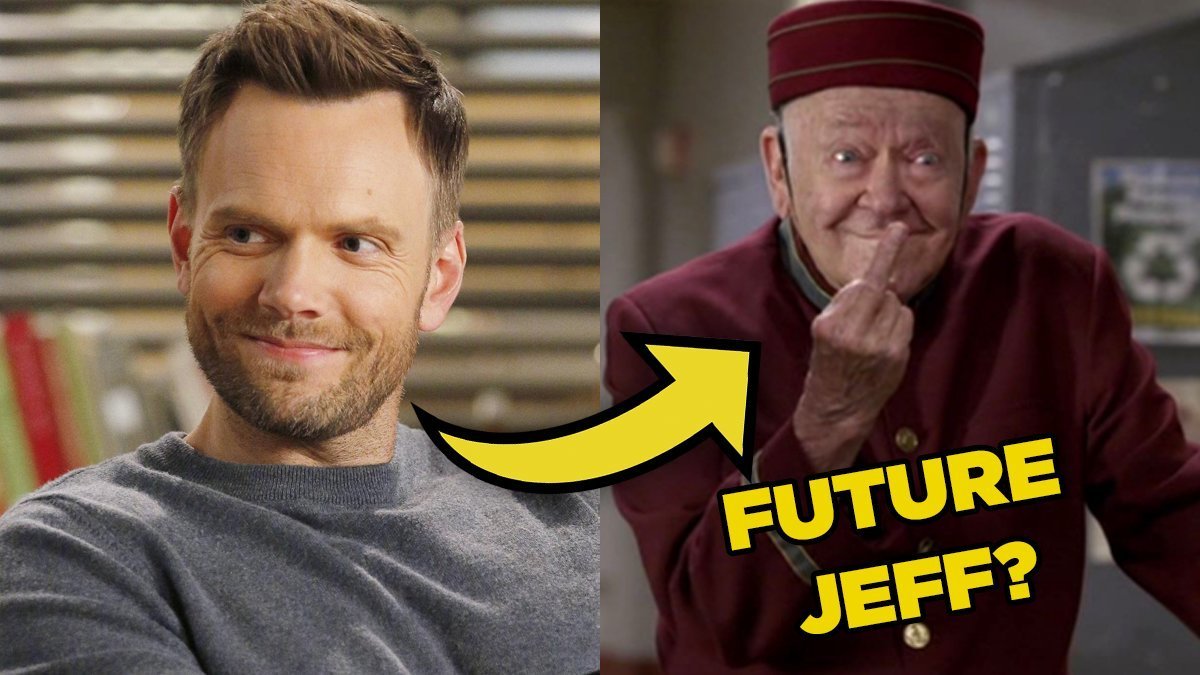
Dan Harmon's sitcom Community is a show tailor-made for fan theories, reveling in meta-commentary, pop culture references, and self-awareness. Its dedicated fanbase has generated some truly brilliant interpretations:
- Abed's Awareness: Perhaps the most famous Community theory posits that Abed Nadir knows he's a character in a TV show. Fans point to his frequent breaking of the fourth wall, his observational nature, and his annual acknowledgments of cameras, suggesting he's the only one truly aware of their fictional reality.
- AC Repair School's Intervention: Remember the zombie outbreak? A theory suggests it wasn't Troy's quick thinking that saved the day by lowering the temperature. Instead, the mysterious AC Repair School, having identified Troy as a prodigious talent, intervened covertly to protect him, seeing his value to their elite world.
- Duncan's Hidden Talent: Despite his alcoholism and general disarray, Professor Ian Duncan is an uncannily accurate psychologist in his assessments of the study group. This theory suggests that beneath his personal struggles lies a truly brilliant, if severely self-sabotaging, mind capable of immense success if he could overcome his demons.
- The Eighth Study Group Member: This heartwarming theory posits that you, the viewer, are the unofficial eighth member of the Greendale Study Group. It’s a nod to the show's meta nature and the deep connection fans feel to its characters, reflecting the direct address and intimate narrative style.
- Annie's Boobs and Chang's Insanity: A wild, interconnected theory links Britta's freeing of a psychosis-inducing monkey early on with Chang's eventual descent into madness. Abed later gives Troy a monkey named "Annie's Boobs," which escapes into the vents where Chang famously lived. The theory: Britta's monkey was Abed's monkey, and Chang was repeatedly bitten by it in the vents, slowly losing his mind to the monkey's psychosis-inducing bites.
- Season 4's Alternate Timeline: Season 4 of Community is notoriously divisive due to a change in showrunners. The fan theory proposes that this season actually follows an alternate timeline, specifically the "Pierce goes to get the pizza" branch from the iconic "Remedial Chaos Theory" episode. This explains its distinct feel, character deviations, and why some plot points (like Britta and Troy's burgeoning relationship) feel slightly off, as if from a subtly different reality.
Expanding Universes: Movies & TV That Beg for More
Beyond Community, countless other narratives have inspired incredible theoretical journeys.
- The Matrix: The Real World is Another Layer: This mind-bending theory suggests that Neo's "escape" into the desolate, machine-ruled real world is just another, more sophisticated layer of the Matrix. Designed for non-conformists, it allows them to believe they are heroic freedom fighters. The true "One" would reject both realities, transcending the simulation entirely.
- Peter Pan: A Darker Neverland: What if Peter Pan isn't the innocent hero we think? This theory posits that Peter Pan kills the Lost Boys who begin to grow up, keeping Neverland eternally youthful. Captain Hook and his pirates, then, are not villains but escaped adults, desperately trying to stop Peter and warn the children.
- Home Alone / Saw: Kevin McAllister is Jigsaw: A truly chilling theory connects the resourceful child protagonist of Home Alone with the intricate, traps-loving villain of the Saw franchise. Kevin's elaborate booby traps, his joy in tormenting intruders, and his exceptional engineering skills are cited as the early makings of Jigsaw.
- Inception: The Ring is the True Totem: In Christopher Nolan's dream-heist film, Cobb's spinning top is his totem, used to distinguish reality from dream. However, a popular theory suggests the top is actually Mal's totem, and Cobb's true, often-overlooked totem is his wedding ring. He wears it only in his dream state, removing it in reality. The appearance of his children's faces at the end signals he's finally in reality.
- Star Wars: R2-D2 Remembers Everything: In A New Hope, R2-D2 apparently doesn't know Obi-Wan Kenobi. The theory states R2's memory was never wiped, and he's actively pretending for Luke's protection, knowing too much about Anakin Skywalker could push Luke towards the dark side. R2-D2 is "no freaking snitch." This ties into another theory: Padme didn't die of a "broken heart" but that Darth Sidious used her life force to save a severely injured Anakin (Darth Vader), a dark side power he hinted at knowing.
- Toy Story: A Troubled Home Life: The first Toy Story film hints at darker domestic issues. Sid's parents are theorized to be addicts (his dad passed out, his mom absent), leading to Sid's neglect and anger, which he projects onto his toys. Another theory suggests Andy's parents are divorcing during the first movie, explaining the move and the general tension.
- House M.D.: A Final Hallucination: In the series finale, House apparently fakes his own death to spend time with his dying friend Wilson. However, a poignant theory suggests House actually died in the fire, and his final ride with Wilson is a beautiful, peaceful hallucination, a final grace note for a complex character.
- Harry Potter: Dumbledore's Calculated Manipulation: Albus Dumbledore, though revered, is often seen by fans as a master manipulator. This theory argues he intentionally left Harry in an abusive home to make him humble, trusting, and easier to control for the greater good, a means to an end in his grand plan against Voldemort. Another popular one: entry into Gryffindor requires the bravery to want to be in Gryffindor, explaining why brave characters with other house traits can be Gryffindors, and Cedric (a natural Gryffindor) is a Hufflepuff because he didn't want to be in Gryffindor.
Cartoon Conundrums and Animated Anomalies
Even seemingly innocent animated worlds are fertile ground for Fan Theories & Community Discussion.
- Scooby-Doo: Stoner Detectives & Economic Downturn: Two prominent theories here: first, that Scooby Snacks are edibles, and Shaggy and Scooby are perpetually high, explaining their constant hunger and sometimes altered perceptions. Second, the prevalence of abandoned properties and desperate criminals suggests the show takes place during a severe economic downturn, driving people to outlandish schemes. Some even suggest the gang are Vietnam War draft dodgers.
- SpongeBob SquarePants: Nuclear Aftermath: Bikini Bottom, the setting of SpongeBob, is located under Bikini Atoll, a real-world nuclear bomb testing site. This theory suggests the bizarre, mutated creatures and events of the show are a direct result of nuclear radiation, explaining the fish with legs and occasional mushroom clouds.
- Pinky and the Brain: Pinky is the Genius: The theme song for Pinky and the Brain famously states "one is a genius, the other's insane." But which is which? A theory suggests Pinky is the true genius, subtly manipulating Brain's grand schemes for his own unknown, perhaps benevolent, ends, or that his "insanity" is actually a higher form of consciousness.
- Avatar: The Last Airbender: Ty Lee's Airbending & a Smaller Planet: Ty Lee's incredible agility and ability to make herself lighter during acrobatics have led to a theory that she's a non-bending descendant of Air Nomads, unconsciously using airbending to enhance her movements. Another theory suggests the Avatar planet is smaller with lower gravity, explaining characters' high jumps, falls without serious injury, and fast travel.
- Dora the Explorer: Visually Impaired Protagonist: This theory suggests Dora is visually impaired, which is why she constantly asks viewers to help her identify nearby objects and rarely looks directly at things, making the interactive element of the show a literal appeal for assistance.
- Ed, Edd n Eddy: Abuse and Retreat: Darker theories surround the Eds' home lives. Ed is theorized to be mentally stunted and suffering from abusive parents who favor Sarah, causing him to retreat into TV and comics. Eddy's parents permitted his brother's abuse, and Double D's parents only communicate via notes, implying emotional distance.
- Pokémon: Pokedex Exaggerations & Failed Clones: One theory posits that Pokedex entries are written by young, impressionable trainers, explaining their often exaggerated and unverified facts. Completing the Pokedex is seen as a "graduation thesis." Another intriguing theory is that Ditto are failed Mew clones, evidenced by their shared color (normal and shiny), height, weight, and the unique ability to learn Transform.
The Double-Edged Sword: Benefits and Pitfalls of Fandom Speculation
While Fan Theories & Community Discussion are overwhelmingly positive, they do come with their own set of challenges.
The Upsides: More Than Just Talking Points
- Heightened Engagement: Theories keep narratives alive long after their official run, encouraging rewatches, deep dives, and continued conversation. This sustained interest can even influence creators, sometimes leading to official recognition or new content like expanded universes or sequels, such as the anticipation around The Croods 3.
- Community Building: Sharing theories and debating their merits creates strong bonds between fans, fostering a sense of belonging and shared purpose. Online forums, social media groups, and conventions are vibrant hubs for this collective intelligence.
- New Perspectives: Theories can shed new light on familiar stories, revealing layers of meaning or connections that might have been overlooked, enriching the overall viewing experience.
- Creative Outlet: For many, theorizing is a creative act in itself, a way to participate directly in the storytelling process.
The Downsides: When Fandom Goes Awry
- Canon Conflict & Disappointment: When a beloved theory is contradicted by official canon, it can lead to significant disappointment or even anger among fans who had invested emotionally in their interpretation.
- Gatekeeping and Toxicity: Intense theoretical debates can sometimes devolve into gatekeeping, where some fans mock or ostracize others for not adhering to a specific theory or for lacking "sufficient" knowledge.
- Creator Pressure: The weight of fan expectations and popular theories can sometimes place undue pressure on creators, potentially limiting their creative freedom or leading them to make choices that appease the loudest voices rather than serve the story.
- Over-Analysis & Loss of Enjoyment: In some cases, the pursuit of theories can overshadow the simple enjoyment of a story, turning every detail into a potential clue rather than appreciating the narrative as presented.
Navigating the Fandom Frontier: Best Practices for Theorizing
Engaging with fan theories is a rewarding experience, but a few guidelines can ensure it remains positive and constructive for everyone involved in the Fan Theories & Community Discussion.
- Distinguish Theory from Canon: Always remember that a fan theory, no matter how compelling, is an unofficial interpretation. It exists in a separate sphere from the creator's intended narrative.
- Cite Your Evidence: When proposing or discussing a theory, be ready to back up your claims with specific examples from the source material. "I just feel like..." is less persuasive than "In Season X, Episode Y, Character Z explicitly says..."
- Embrace Disagreement (Respectfully): Diverse interpretations are the lifeblood of fan theories. Be open to having your ideas challenged, and challenge others with respect and curiosity, not animosity.
- Avoid Spoilers (Where Applicable): Be mindful of others' viewing experiences, especially when discussing theories about ongoing shows or unreleased content.
- Keep it Fun: At its core, theorizing is a form of play. Don't let the pursuit of "truth" overshadow the enjoyment of the story and the camaraderie of the community.
Beyond the Screen: Your Role in the Ongoing Story
The world of Fan Theories & Community Discussion is a testament to the enduring power of stories and the insatiable human desire to connect, analyze, and imagine. It's a dynamic, evolving landscape where every detail can hide a deeper truth and every shared thought contributes to a richer, more vibrant understanding of our favorite fictional realms.
So, the next time you're captivated by a show, a book, or a game, and a tiny question sparks in your mind, don't just let it pass. Lean into that curiosity. Delve into the forums, share your thoughts, and become an active participant in the ongoing, communal storytelling experience. Because in the realm of fandom, the best stories are often the ones we tell ourselves, together.